

Stop Winter Dry Skin & Hair: Build Resilience From the Inside Out
Written by: Dr. Ilma Imtiaz
For many of us, it’s a common experience: Winter hits, the thermostat gets dialed up and so begins the battle to maintain comfortable skin throughout the next few months. Cold air, icy wind and dry indoor heat work together to strip away vital moisture, leaving you with a compromised skin barrier. Additionally, winter weather can also affect your hair, leading to fragile strands.
So, what do you do for winter dry skin? True winter resilience requires more than just topical moisturizers — it calls for a strategy that supports your skin's strength and hydration from the inside out, including using science-backed nutrients like collagen and hyaluronic acid.
Why Does Winter Air Make Skin and Hair Dry?
If your skin feels tight by lunchtime, it might be experiencing the winter blues. Ongoing exposure to cold air and indoor heating can wreak havoc as moisture is drawn away and the skin’s natural barrier is compromised. Similarly, the scalp is exposed to environmental elements, leading to greater dryness and hair becoming more fragile. And at the center of all of this is something called transepidermal water loss, or TEWL.
SCIENCE EXPLAINED: What is transepidermal water loss?
Transepidermal water loss (TEWL) is essentially your skin’s 'hydration leak.' It’s the natural process where moisture evaporates through your barrier.
TEWL increases in cold winter conditions, reducing hydration, heightening sensitivity and triggering flare-ups of dry or eczema-prone skin.1,2,3 Research also suggests that repeated winter-related shifts in temperature and humidity may reduce skin elasticity, particularly in women over 30, making fine lines and dullness more noticeable.4
Topical skincare remains essential, but winter often calls for a broader strategy. Supporting skin and hair from within, through collagen peptides, hyaluronic acid and nutrient-dense foods, can help maintain comfort, resilience and hydration when the environment is working against you.
Your Skin Barrier vs. Cold Air: How Winter Disrupts Lipid Structure
Healthy skin depends on its outermost layer, the stratum corneum, which functions like a “brick and mortar” barrier. Skin cells form the bricks, while natural lipids act as the mortar that holds everything together, sealing in moisture and protecting against environmental stress.
During winter, cold temperatures and low humidity disrupt this lipid structure. Natural oil (sebum) production slows, moisture escapes more easily, and the barrier struggles to stay intact. As TEWL increases, skin may feel tight, rough, flaky or reactive, especially on the face, where temperature changes are most abrupt.2,5
Winter also slows skin cell turnover, allowing dry cells to accumulate on the surface. The result? Dull-looking skin, rough texture and fine lines that appear more pronounced.
Your Hair vs. Cold Air: How TEWL Affects Your Strands
The scalp is actually skin, and it follows the same rules as the rest of the body. Low humidity and heated indoor air increase TEWL from the scalp, stripping away natural oils and leading to tightness, itchiness and fine white flaking as dry cells accumulate.6,7
At the same time, dehydrated hair fibers develop raised cuticles, making strands feel coarse, look dull and break more easily. Winter dryness doesn’t just affect how hair looks; it changes how it behaves.
Beyond Topical Creams: How Internal Nutrition Boosts Skin Resilience
In recent years, the concept of “beauty from within” has gained momentum, supported by growing research into nutrients such as bioactive collagen peptides, which are often referred to as BCPs, and hyaluronic acid.8
Unlike topical products, these ingredients work within the body to address changes in skin and scalp integrity. After digestion, BCPs and hyaluronic acid are absorbed by the body, either becoming building blocks for skin structure or acting as signals that support collagen production and strengthen hydration pathways.8,9
Topical skincare targets the surface. Internal nutrition supports deeper layers. When the two approaches are combined, clinical studies suggest improvements in skin moisture and elasticity can be more noticeable, particularly during winter, when environmental dryness continuously draws water away from the skin.5
Bioactive Collagen Peptides: Supporting Structure and Elasticity
Bioactive collagen peptides are short protein fragments produced through enzymatic hydrolysis of bovine or marine collagen. Unlike intact collagen, these peptides are easily absorbed and act as bioactive signals, stimulating skin cells such as fibroblasts to increase the body’s own collagen production.10
Across multiple randomized, placebo-controlled studies, daily supplementation with VERISOL bioactive collagen peptides has been shown to improve skin elasticity, reduce wrinkle depth and enhance skin hydration, particularly in women experiencing age-related dryness.10,11,12 A systematic review and meta-analysis also found that consistent collagen intake over 8–12 weeks significantly improved skin moisture and elasticity compared to the placebo.9
Evidence for VERISOL also extends to nail and hair health. In a 24-week study, 2.5 g/day increased nail growth by 12% and reduced broken nails by 42%.10 In another placebo-controlled trial (n = 44; ages 39–75), 2.5 g/day significantly increased hair thickness, including a 31% rise in follicle cell proliferation compared to the placebo.13
Mechanistically, collagen peptides are rich in glycine, proline and hydroxyproline, amino acids that enter circulation after ingestion and stimulate dermal fibroblasts to produce collagen and elastin.8,14,15 Over time, this supports a stronger dermal matrix, helping skin retain moisture more effectively and better tolerate the increased TEWL seen in winter.
In simple terms, collagen helps reinforce the skin’s scaffold, making it more resilient when dryness is unavoidable.
Hyaluronic Acid: Deep Hydration from the Inside
Hyaluronic acid (HA) is a naturally occurring polysaccharide that acts like a molecular sponge, binding many times its weight in water and contributing to skin plumpness, elasticity and smooth texture.16 With age and environmental stress, skin HA levels decline, a factor magnified by cold, dry air.
Several double-blind, randomized clinical trials have investigated oral HA supplementation, typically at doses ranging from 120 to 200 mg per day. These studies report improvements in skin hydration within 2 – 8 weeks, along with gains in skin tone, elasticity and epidermal thickness over longer use.16,17,18 A recent review of oral HA supplements echoed these findings, showing consistent hydration benefits across diverse populations.19
If collagen supports the scaffold, hyaluronic acid helps keep that scaffold hydrated, a powerful combination when humidity is low and moisture loss is constant.
Daily Winter Habits that Support Your Results
Supplements work best when daily habits protect the skin barrier rather than undermine it. Small winter adjustments can make a noticeable difference:
- Use lukewarm (not hot) water in the shower and keep showers shorter to avoid stripping skin lipids.
- Choose gentle, low-foaming cleansers and ceramide-rich moisturizers to reinforce the skin barrier and reduce TEWL.
- Apply moisturizer within a few minutes of bathing to lock in water and consider a richer cream or balm at night on vulnerable areas.
- Use a humidifier in heated rooms, aiming for an indoor humidity level of around 40–50% to reduce the drying gradient between the skin and air.
From a nutrition perspective, consistent protein intake provides amino acids for skin repair, while omega-3 fats (from salmon, sardines, flax or walnuts) support barrier lipids. Colorful fruits and vegetables supply antioxidants that help protect collagen and cell membranes from oxidative stress.
Anchor Your Routine: How to Prevent Winter Dry Skin
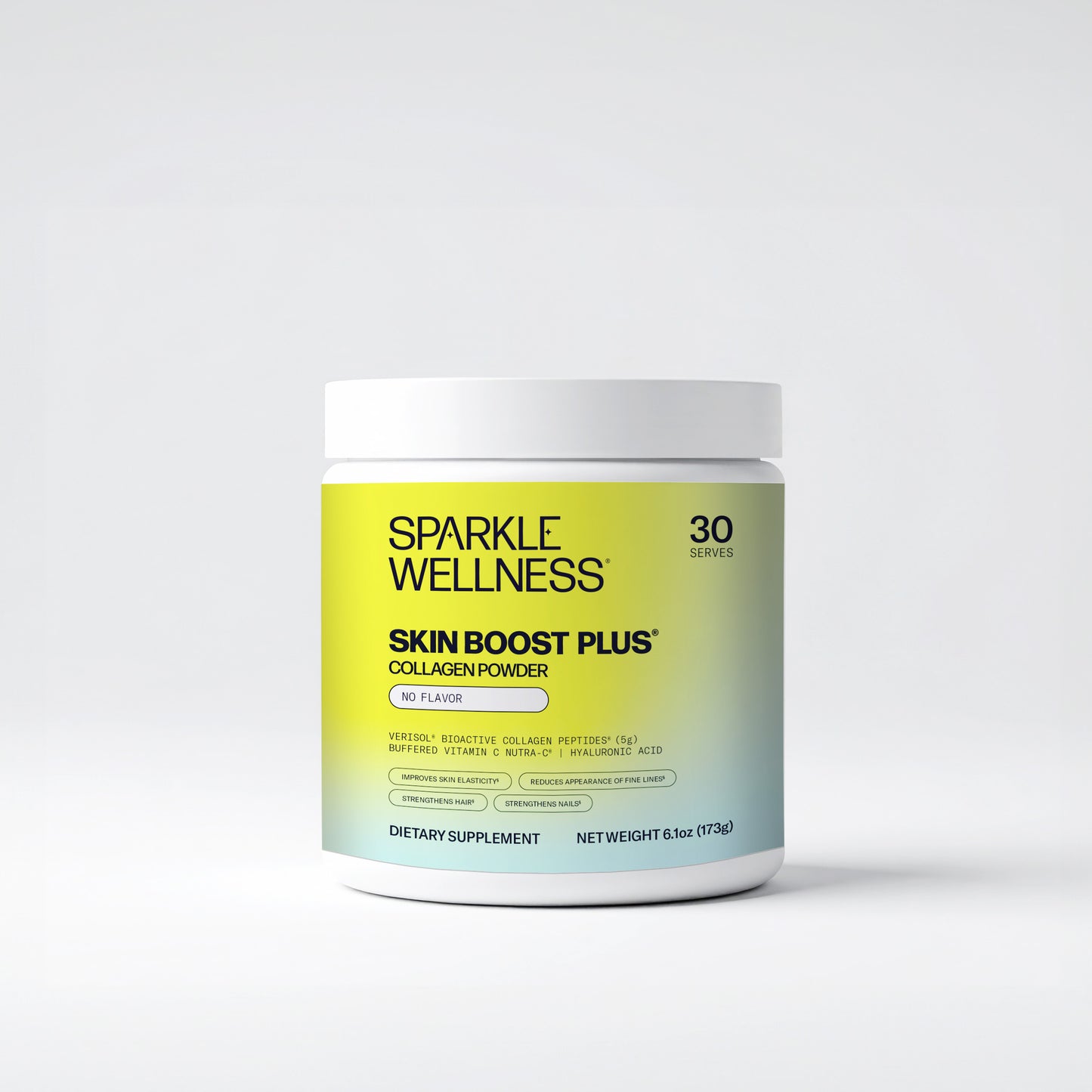
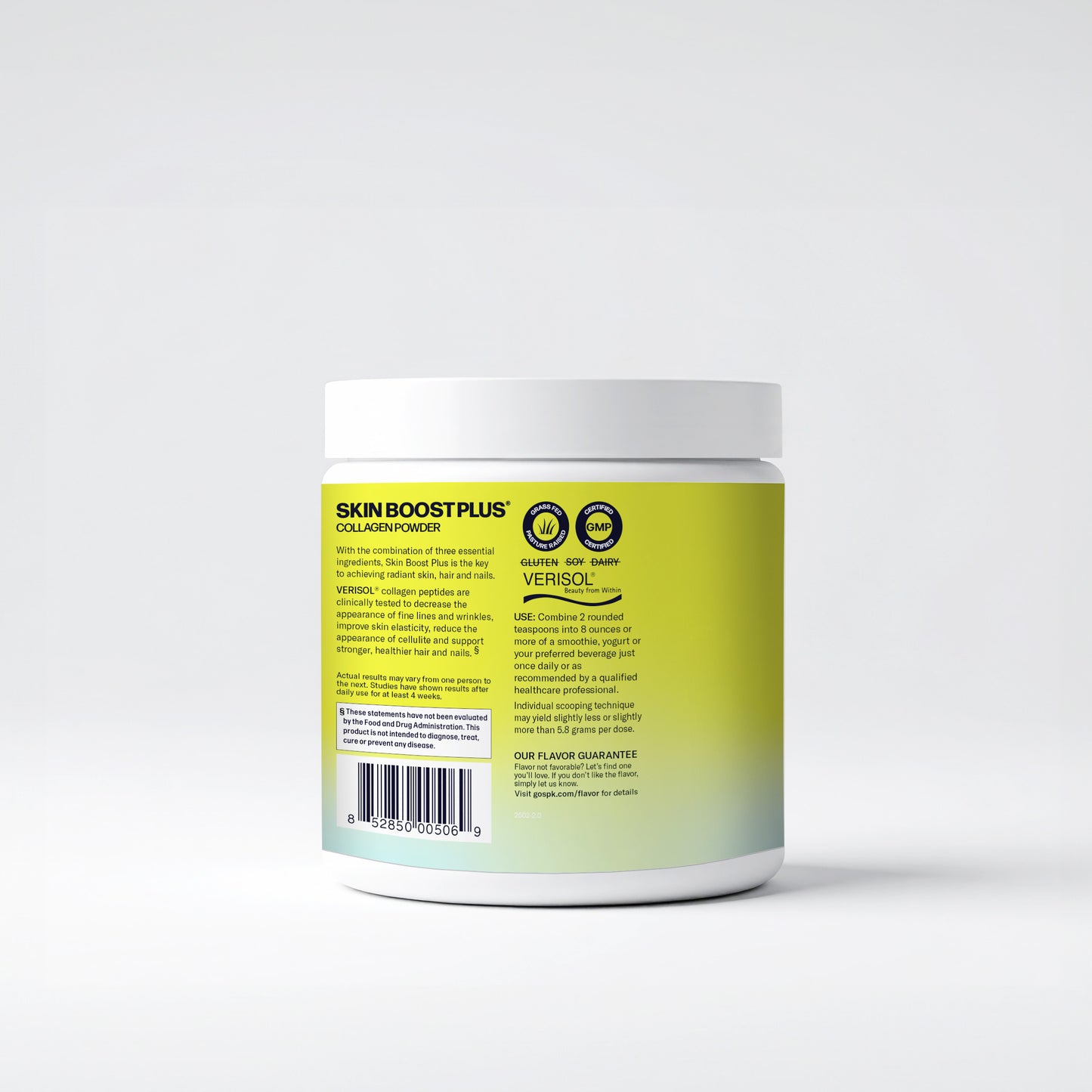
A daily collagen supplement that includes hyaluronic acid, such as Sparkle Wellness’ “beauty from within” formula, like Skin Boost Plus or Skin Boost Plus Marine with VERISOL bioactive collagen peptides, can act as the anchor of a winter routine.
When paired with thoughtful skincare and winter-friendly lifestyle habits, this inside-out approach gives skin and hair a better chance to stay comfortable, resilient and radiant through the harsher months.
 Dr. Ilma Imtiaz has a background in biomedical and naturopathic research and recently completed her PhD at the National Centre for Naturopathic Medicine, Southern Cross University, Australia. She is a lead and co-author of multiple peer-reviewed publications, including experimental and review papers across herbal medicine, cancer biology and molecular mechanisms.
At the heart of her work is a passion for science communication, translating complex evidence into clear, engaging, and accessible insights. She is committed to evidence-led wellness and supporting informed, balanced health decisions.
References
- Nomoto T, Iizaka S. Effect of an oral nutrition supplement containing collagen peptides on stratum corneum hydration and skin elasticity in hospitalized older adults: a multicenter open-label randomized controlled study. Adv Skin Wound Care. 2020;33(4):186-191. https://doi.org/10.1097/01.Asw.0000655492.40898.55
- Kunz M, Seifert B, Trüeb RM. Seasonality of hair shedding in healthy women complaining of hair loss. Dermatology. 2009;219(2):105-110. https://doi.org/10.1159/000216832
- Mughni FA, Widaty S, Nilasari H, Krisanti RIA. Measurements of scalp transepidermal water loss and hydration in women wearing hijab correlated with hair wash frequency. Int J Trichology. 2024;16(1-6):16-24.https://doi.org/10.4103/ijt.ijt_61_22
- Dewi DAR, Arimuko A, Norawati L, et al. Exploring the impact of hydrolyzed collagen oral supplementation on skin rejuvenation: a systematic review and meta-analysis. Cureus. 2023;15(12):e50231.https://doi.org/10.7759/cureus.50231
- Pu SY, Huang YL, Pu CM, et al. Effects of oral collagen for skin anti-aging: a systematic review and meta-analysis. Nutrients. 2023;15(9). https://doi.org/10.3390/nu15092080
- Hexsel D, Zague V, Schunck M, Siega C, Camozzato FO, Oesser S. Oral supplementation with specific bioactive collagen peptides improves nail growth and reduces symptoms of brittle nails. J Cosmet Dermatol. 2017;16(4):520-526. https://doi.org/10.1111/jocd.12393
- Proksch E, Zdzieblik D, Oesser S. The oral intake of specific bovine-derived bioactive collagen peptides has a stimulatory effect on dermal matrix synthesis and improves various clinical skin parameters. Cosmetics. 2025;12(2):79. https://doi.org/10.3390/cosmetics12020079
- Steele C. Collagen: a review of clinical use and efficacy. Nutr Med J. 2022;1(2):12-36.https://nutrimedicaljournal.com/index.php/nmj/article/view/18
- Oesser S. The oral intake of specific bioactive collagen peptides has a positive effect on hair thickness. Int J Nutraceuticals Funct Foods Novel Foods. 2020. https://nutrafoods.org/archive/2020/volume-19-1/
- Lee M, Kim E, Ahn H, Son S, Lee H. Oral intake of collagen peptide NS improves hydration, elasticity, desquamation, and wrinkling in human skin. Food Funct. 2023;14(7):3196-3207.https://doi.org/10.1039/D2FO02444D
- Jiang W, Wang J, Zhang H, et al. Seasonal changes in the physiological features of healthy and sensitive skin. J Cosmet Dermatol. 2022;21(6):2581-2589. https://doi.org/10.1111/jocd.14476
- Park EH, Jo DJ, Jeon HW, Na SJ. Effects of winter indoor environment on the skin: Unveiling skin condition changes in Korea. Skin Res Technol. 2023;29(6):e13397. https://doi.org/10.1111/srt.13397
- Uenishi T, Sugiura H, Uehara M. Changes in the seasonal dependence of atopic dermatitis in Japan. J Dermatol. 2001;28(5):244-247. https://pubmed.ncbi.nlm.nih.gov/11482461/
- Jang SI, Lee M, Jung Y, et al. Skin characteristics following repeated exposure to simulated outdoor and indoor summer temperatures in South Korea and Southeast Asia. Int J Cosmet Sci. 2021;43(3):352-358.https://doi.org/10.1111/ics.12702
Li P, Wu G. Roles of dietary glycine, proline, and hydroxyproline in collagen synthesis and animal growth. Amino Acids. 2018;50(1):29-38. https://doi.org/10.1007/s00726-017-2490-6
- Gao YR, Wang RP, Zhang L, et al. Oral administration of hyaluronic acid to improve skin conditions via a randomized double-blind clinical test. Skin Res Technol. 2023;29(11):e13531. https://doi.org/10.1111/srt.13531
- Michelotti A, Cestone E, De Ponti I, et al. Oral intake of a new full-spectrum hyaluronan improves skin profilometry and ageing. Eur J Dermatol. 2021;31(6):798-805. https://doi.org/10.1684/ejd.2021.4176
- Oe M, Sakai S, Yoshida H, et al. Oral hyaluronan relieves wrinkles: a double-blinded, placebo-controlled study over a 12-week period. Clin Cosmet Investig Dermatol. 2017;10:267-273. https://doi.org/10.2147/ccid.S141845
- Amin P, Sarabi A, Choe S, et al. Oral hyaluronic acid supplement: efficacy in skin hydration, elasticity, and wrinkle depth reduction. J Drugs Dermatol. 2025;24(9):910-919. https://doi.org/10.36849/jdd.8542